



Multi-order picking in the warehouse: the false good idea of "100% grouped" (and how to find the right balance)
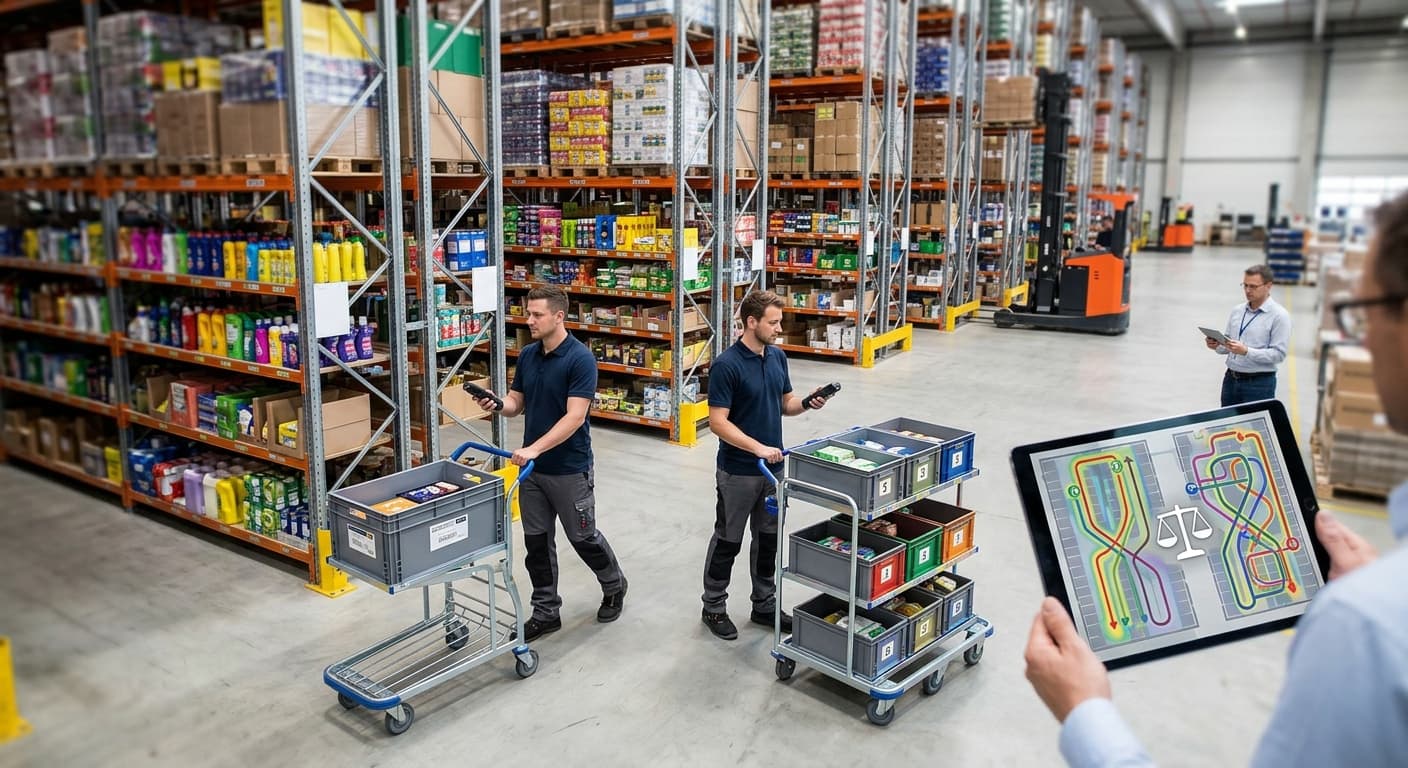
In order picking logistics, one dogma persists: the more orders you group into a single mission, the more you reduce the distance traveled, and thus the higher your productivity.
On paper, the calculation is appealing. Why have an operator walk an entire aisle for a single order (single-order / single-customer) when they could pick items for three, four, or five different orders in a single pass (multi-order / multi-customer)?
Yet, in practice, pushing multi-order picking to the maximum quickly reveals its limits. Between sorting constraints, container congestion, and variability in order formats, "100% multi" can paradoxically destroy value.
So, how do you finely manage the trade-off between single and multi-order picking? Why is the rigid approach of traditional WMS no longer sufficient? Let's break it down.
1. The promise of multi-order picking: kilometers saved
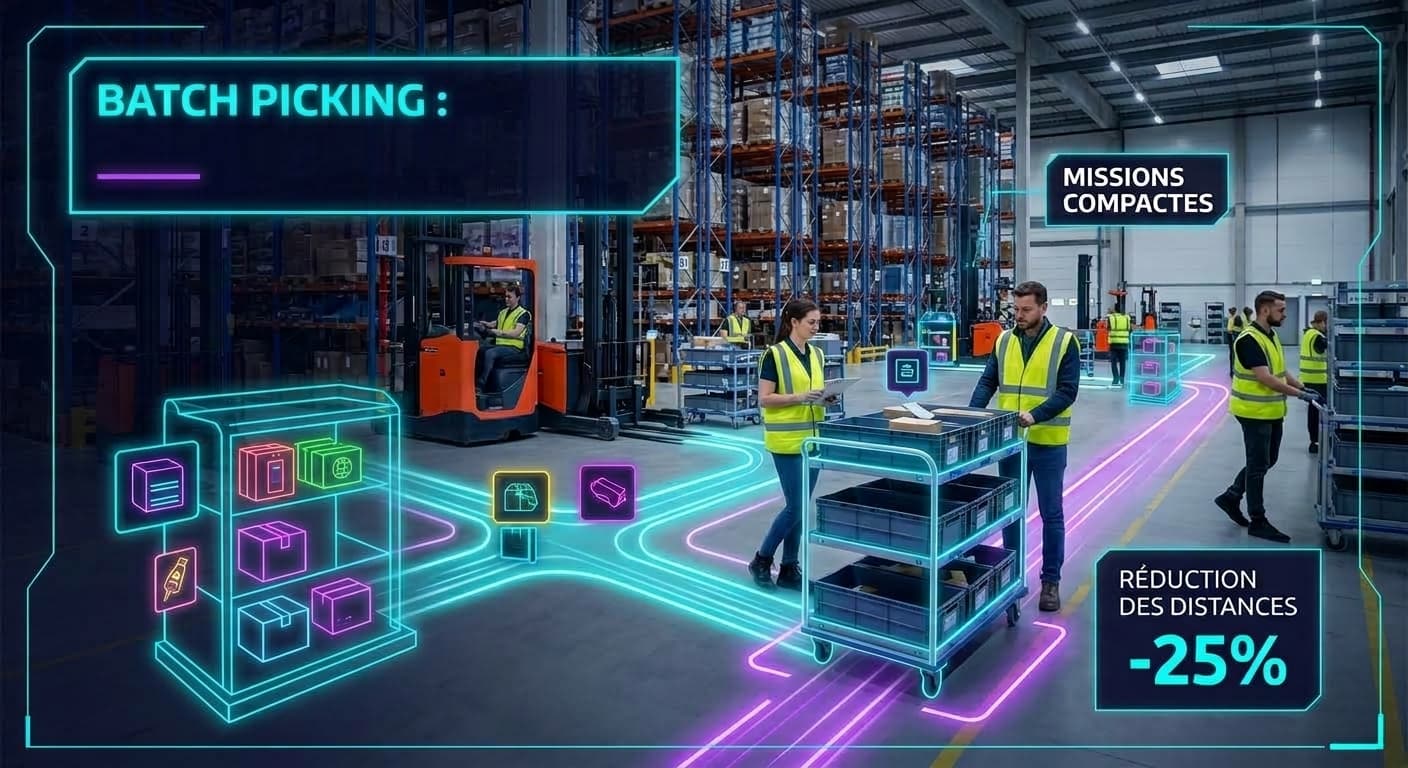
The main advantage of multi-order picking (or batch picking) lies in pooling movements. By grouping several picking orders into a single route:
- You increase the number of picks per stop and in each half-aisle.
- You drastically reduce empty travel (the transition trips between storage zones or to the shipping area).
On a complex logistics site, moving from a purely single-order mode to a controlled grouping rate of around 20% immediately allows you to reduce overall distances by 10% to 15%, depending on the item types and picking density.
So why not aim for 100% multi-order picking everywhere, all the time?
2. The trap of "All Multi": underestimated operational constraints
Blindly increasing the multi-order rate creates side effects that erode or even cancel out distance savings:
- Physical saturation of supports (carts / vehicles): The more orders you add to a single cart, the less volume is available per order. If the support is quickly saturated, the picker completes partial missions or must make multiple returns to the drop-off area.
- Sorting complexity during picking (Pick and Sort): Picking for multiple recipients at once increases the risk of allocation errors. This requires extra checks (repeated scans, Put-to-Light cubby furniture) that add fixed time to each pick.
- Bottleneck at packing (Burst / Splitting): If sorting isn't done during picking, it's pushed downstream. This clogs packing tables and consolidation areas.
- Variability in order profiles: A bulky item or a very heavy order is not well suited to grouping. Forcing multi-order picking on these profiles harms ergonomics and operator safety.
3. Not all flows are equal: the concept of a "useful ceiling"
This is the main finding we make at Find & Order during our performance audits: each process or order type has its own "useful ceiling" for multi-order picking.
Take the example of a warehouse managing three main channels or store types:
- "Large Format" orders (bulky): Orders include many parcels/pallets. The pick density per order is already high. Here, pushing multi-order picking beyond 30% or 40% brings little additional distance savings but creates significant logistical complexity.
- "Medium Format" orders (supermarkets / department stores): The pooling potential is intermediate. Optimal distance savings (up to -20%) are often achieved with a grouping rate capped around 60% to 70%.
- "Proximity / E-commerce" orders (small baskets): This is where multi-order picking makes the most sense. Since orders have few lines scattered throughout the warehouse, pooling enables spectacular gains (up to -30% distance traveled). But again, eliminating the exclusive (single-order) process without volume constraints can block flows in the shipping area.
Key takeaway: Applying a uniform multi-order rate across a site is a mistake. The right balance depends on basket composition, warehouse layout, and seasonality.
In the graph below, the site operations manager can see for each target multi-client preparation ratio how the algorithm distributes distance savings by process/client. A process can combine up to 3 clients. Distance savings per process are not optimal at the same multi-client ratios.

4. How to continuously manage the right balance with Find & Order?
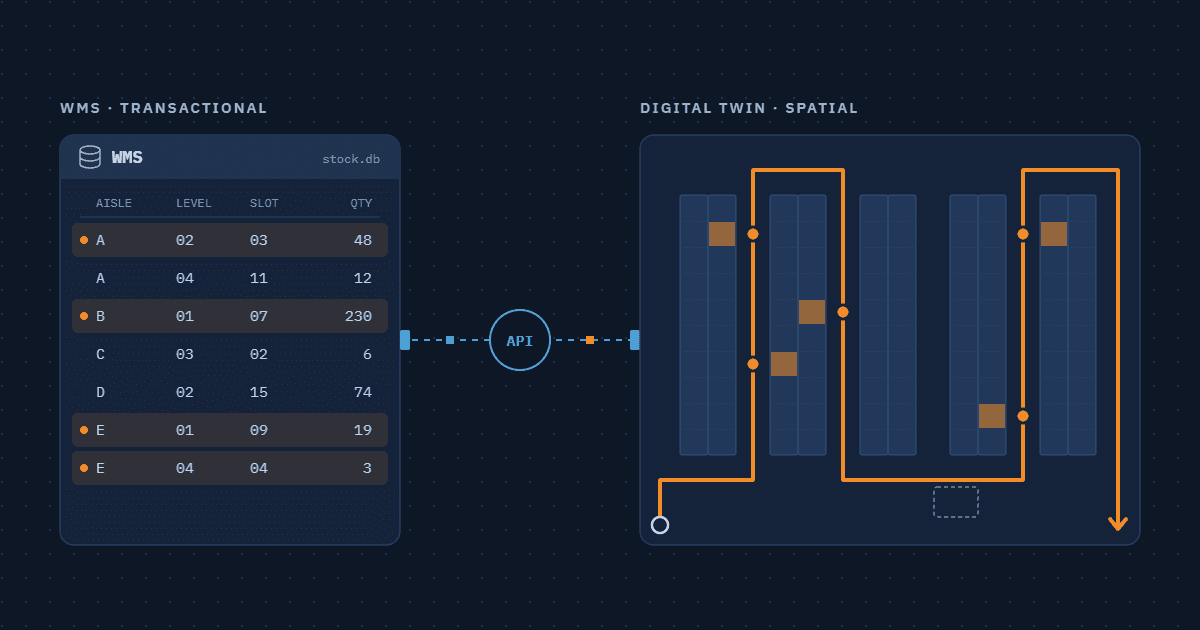
Most WMS (Warehouse Management Systems) apply static, rigid grouping rules. They often lack the geographic precision needed to calculate the true "spatial proximity" of items to be picked.
This is where the optimization software layer from Find & Order comes in:
a) Real geographic proximity calculation (3D Digital Twin)
Instead of relying on simple theoretical WMS address sequences, our algorithm uses the 3D digital twin of your site. It calculates actual distances to the nearest meter, factoring in traffic flow, aisle constraints, and bin heights.
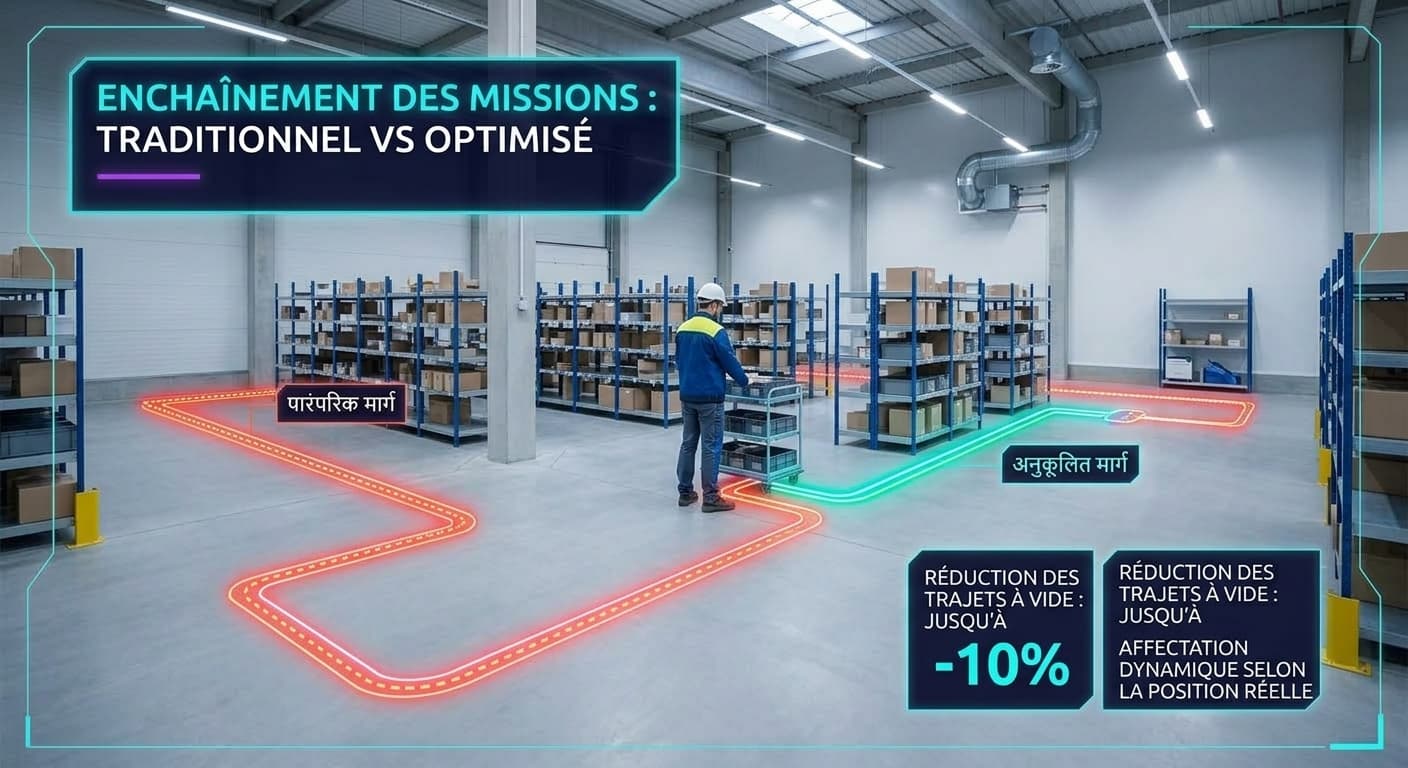
b) Creation of "compact" and adaptive missions
Find & Order analyzes the order book in real time to create smart groupings. The software doesn't group "just to group," but identifies orders that truly share common picking zones.
c) Dynamic management of multi-order ceilings
Depending on site workload, vehicle availability, picking profiles, and shipping deadlines (CUT-OFF), our solution automatically adjusts the balance between single and multi-order picking:
- A saturated "Proxi" order profile? The system adjusts the multi-order ceiling to avoid congestion.
- A single-item urgent order? It is directly isolated in a short route without hurting overall productivity.
Conclusion: Don't choose between single and multi, manage flexibility
Order picking management is not a binary choice between 100% single or 100% multi. It's a continuous balancing act.
By adding spatial intelligence to your existing business tools (WMS / ERP), Find & Order enables your operations teams to unlock up to 30% productivity and reduce up to 50% of distances traveled, while respecting the physical constraints of your operators and sites.
Want to assess the "useful ceiling" for multi-order picking on your logistics sites?
👉Run a simulation of your potential gains with our experts.
👉 Discover our different optimization levers for your warehouses