



AI and WMS: Why warehouse optimization cannot do without operations research
 ArthurCoFounder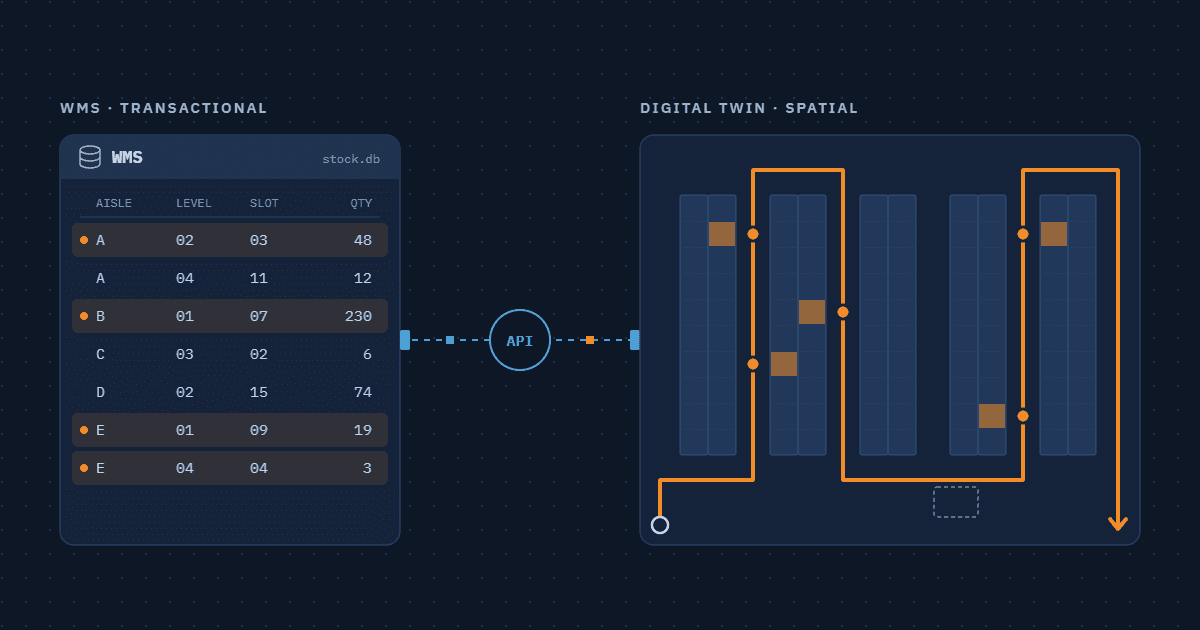
In the early 2000s, the American giant Siebel Systems reigned supreme over the global customer relationship management (CRM) software market. Convinced that its dominant position and monolithic architecture would be enough to block the rise of the Cloud and interconnected solutions, the company slowed down technological partnerships to favor an autonomous and closed model. A few years later, isolated and overtaken by players who had bet everything on system interoperability, the leader collapsed. Today, the logistics sector seems to be facing a similar temptation: that of the Warehouse Management System (WMS) as a self-sufficient solution, driven by the massive integration of artificial intelligence.
This race for innovation among WMS vendors is explained by three major factors: a strong marketing need to modernize the image of software for supply chain decision-makers; a desire to capture all customer value by locking in their ecosystem (lock-in); and a skills bias that leads to the belief that an IT traceability expert can naturally manage physical optimization on the ground.
However, this trend toward siloed development is pushing some players to try to internalize everything. A central question then arises: can software designed to guarantee inventory data, simply by adding AI modules, become an expert in the physics and geometry of the warehouse?
The WMS and the spatial engine: two different job descriptions
To understand the limits of all-in-one solutions, it's important to distinguish the nature of the technologies involved. By definition, the WMS is transactional: it excels at compliance, traceability, and macro-level scheduling. Its structure is based on a relational database. It operates using alphanumeric "coordinates" (Aisle A, Level 2, Location 3).
Fine-grained field optimization, on the other hand, is spatial and mathematical. Solving the problem of optimal routing (picking), dynamic slotting, mission planning or grouping of containers and orders—the most critical challenge for maximizing picker load capacity—requires heavy combinatorial calculations that fall under operations research (OR).
To be effective, this engineering requires:
- A precise digital twin: A 3D model of the warehouse that incorporates real constraints (aisle width, traffic flow, physical obstacles).
- Topology algorithms: Calculations based on real metric distances, not theoretical location-to-location distances.
Statistical AI learns from the past; operations research models the future to find the absolute optimum. Asking a WMS to solve complex OR problems on its own is a bit like asking an excellent accounting tool to do industrial modeling.
Putting an end to the "black box" effect: choosing transparency
Beyond pure performance, the massive integration of AI by WMS presents a major challenge in the field: the black box effect. When a statistical AI algorithm reorganizes a route or changes a schedule without the teams being able to understand the logic, operator buy-in collapses. An inexplicable decision is a contested decision.
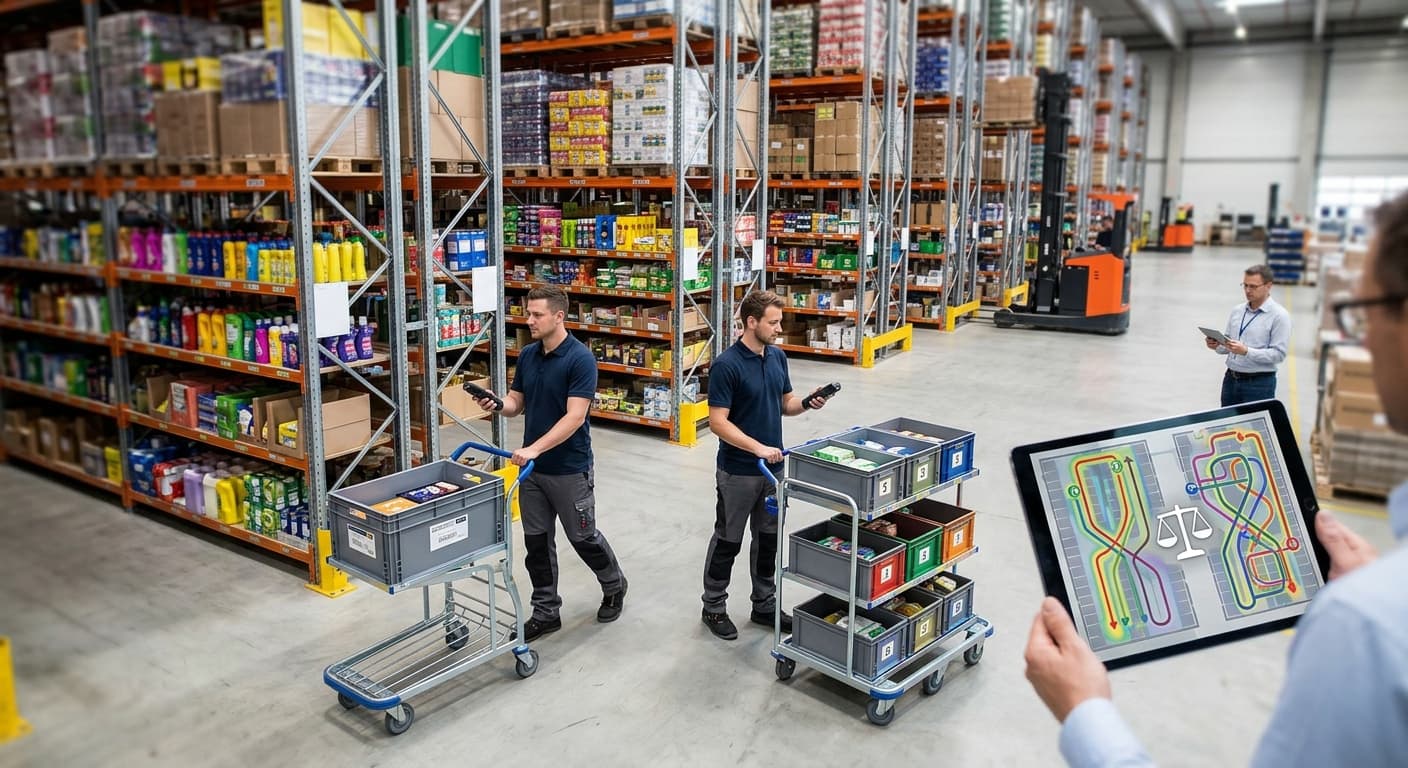
This is precisely one of the breaking points with specialized approaches like that of Find & Order. By relying on operations research and a digital twin, every picking route, every grouping of containers, and every mission assignment remains explainable, transparent, and challengeable by the site manager. Humans stay in control because the algorithm provides clear geometric and mathematical evidence, not opaque predictions.
The limits of monolithism versus Open Innovation
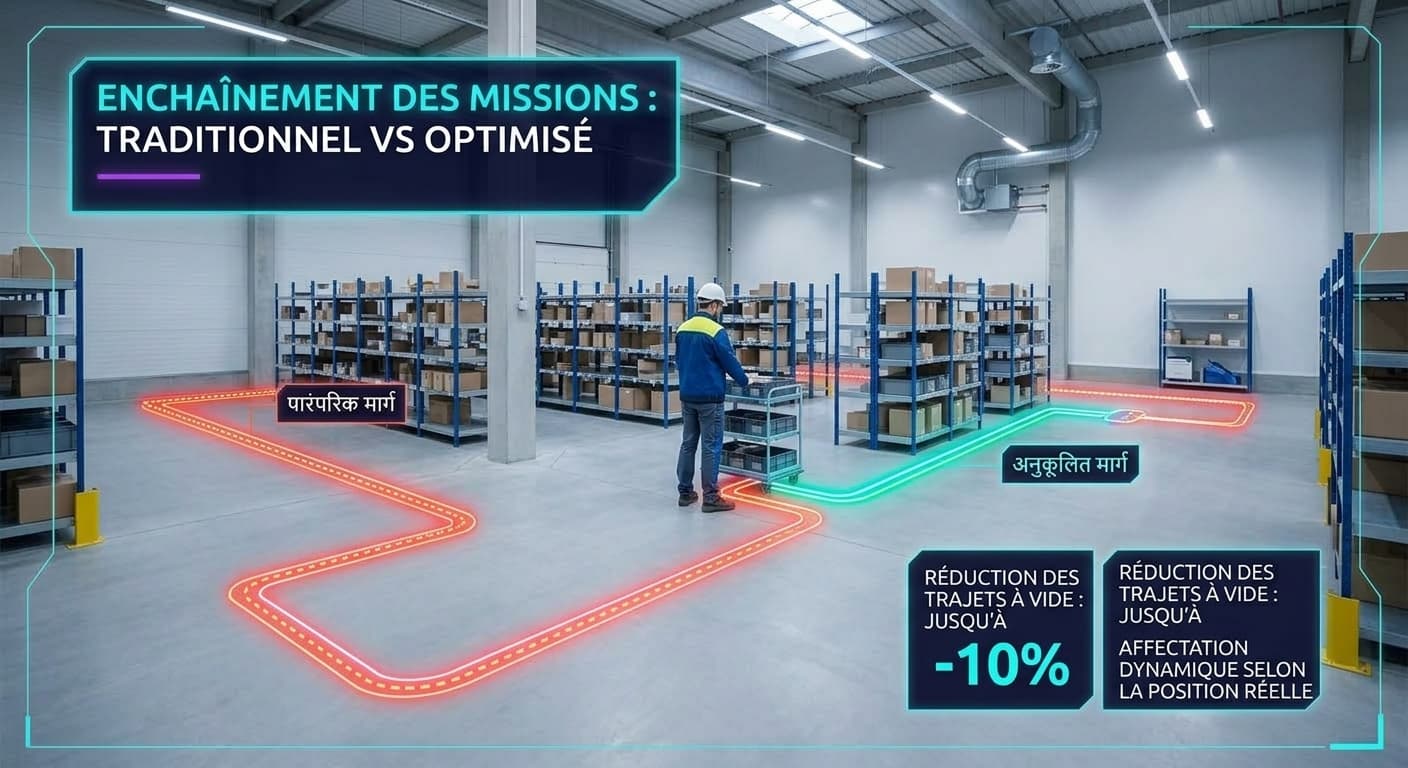
The temptation for an editor to go "all-in-one" is understandable, but it often runs up against reality. Siloed development of geospatial optimization modules requires highly specialized R&D. Without it, the features integrated by WMS often remain limited to rigid business rules, struggling to handle the complexity of empty travel or dynamic wave windows.
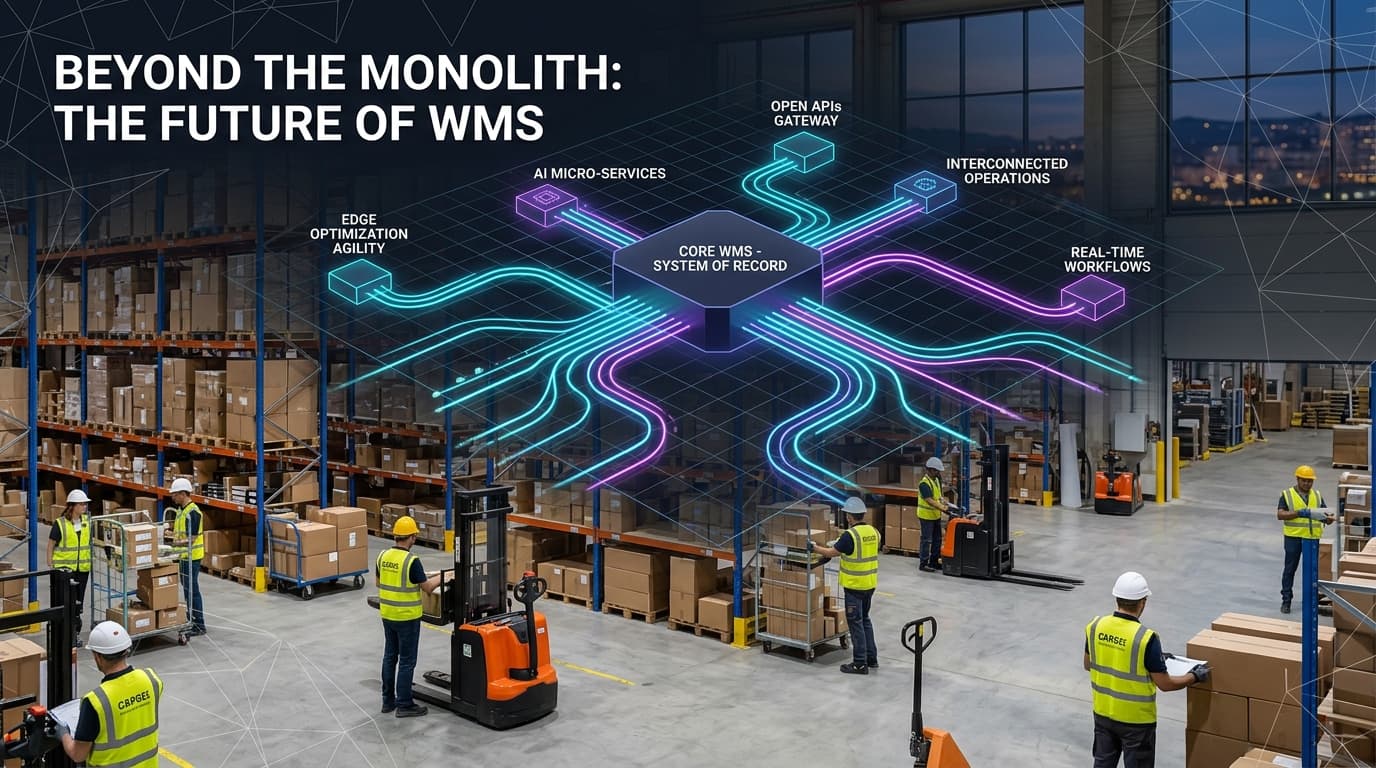
The alternative does not lie in isolation, but in Open Innovation. Software history shows that the future belongs to modular architectures interconnected via API (the Best-of-Breed model). The goal is not to replace the WMS, but to enhance it by adding the spatial calculation and container grouping module it natively lacks.
Complementarity as the cornerstone
Rather than opposing visions, market maturity lies in technological collaboration. A WMS strong in its management features, connected in real time to an agile optimization engine and a digital twin, creates an augmented, transparent, and immediately profitable site supervision solution for the warehouse manager.
By choosing open technology partnerships, vendors and logistics providers are not compromising: they are getting the best of both worlds to build a truly robust supply chain.