Warehouse slotting: Why a complete re-layout is (almost) never the solution
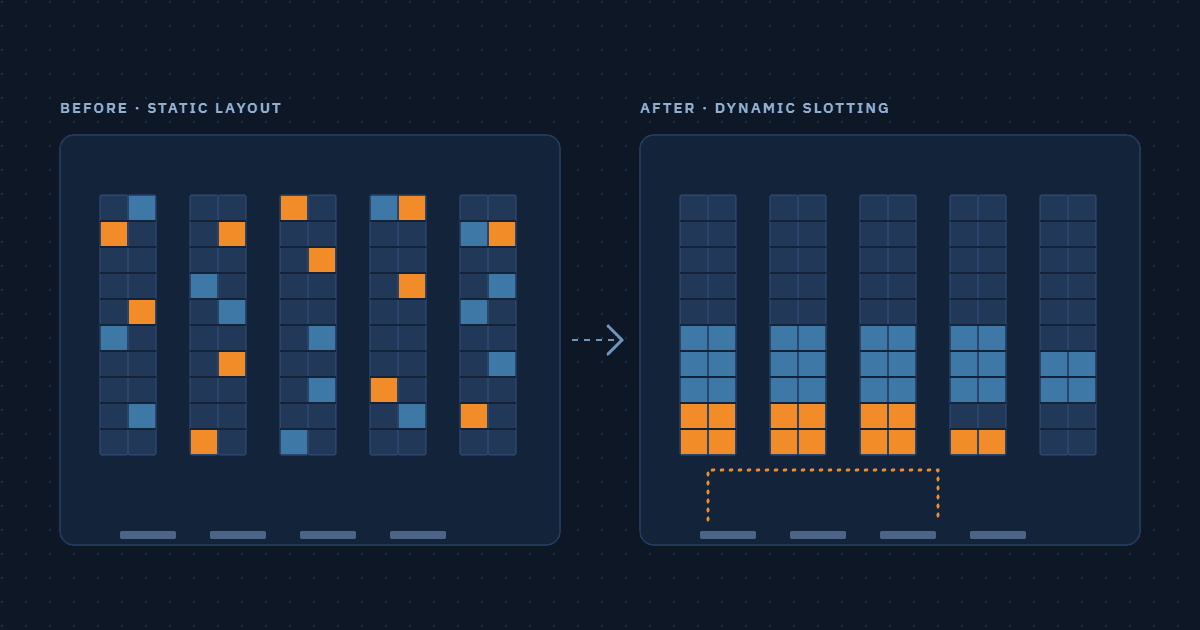
When we talk about slotting (optimizing product placement in a warehouse), the first image that often comes to mind is a major re-layout project: moving thousands of SKUs, shutting down aisles for a weekend, and reconfiguring all the racking.
In practice, this "big bang" approach presents two major issues:
- It represents a significant operational cost in terms of downtime and handling.
- It is based on the illusion that an ideal, static storage plan can last over time.
In reality, effective slotting analysis is anything but a monolithic recommendation for absolute positioning. It is a decision-making process broken down into modular, chronological methodological steps.
Before launching a slotting project, here are the key questions to ask yourself and the analysis framework to use to define your real need.
1. Analysis of physical constraints and business rules: What are your non-negotiables?
Before optimizing travel times or picking frequencies, a slotting project must first map out the non-negotiable physical constraints of your facility:
- Chemical or regulatory incompatibilities: Separation of hazardous products, food items vs cleaning products.
- Volume, weight, and containers: Floor or beam load capacities, bin dimensions vs parcel sizes.
- Temperature-controlled or secure zones: Controlled temperature (chilled/frozen), high-security cages for high-value items.
The question to ask: Does your analysis tool natively integrate your business constraints, or does it just manipulate a theoretical Excel table of rotations?
2. Zone analysis and ABC allocation: Where is the effort?
The next step is to divide the warehouse into functional zones and perform a velocity analysis (ABC method or FMR classification).
- Zone A (Fast-movers): The 20% of SKUs that account for 80% of picks should get the most accessible locations, closest to inbound or shipping areas.
- Zones B and C (Slow-movers): These items can be relegated to secondary aisles or higher locations.
The goal at this stage is not yet to assign a product to a specific rack, but to assess the saturation rate of each zone and check if the current allocation is causing bottlenecks in certain aisles.
3. Equipment analysis, the "Golden Zone," and replenishments
Once the main zones are defined, it's necessary to qualify the equipment and picking ergonomics:
- The Golden Zone (comfort zone): High-velocity products should be placed between the operator's waist and shoulders to maximize picking speed and reduce strain.
- The Picking vs Replenishment trade-off (Replenishment): Placing a very fast-moving SKU in a small, easily accessible bin can speed up picking, but will increase replenishment needs from reserve stock fivefold.
4. Micro-slotting and pick co-occurrence: The heart of optimization
It's at the individual SKU level (SKU-level) that the real added value is found. Modern micro-slotting relies not only on sales volume, but on two key factors:
- Pick co-occurrence: Which products are frequently ordered together? Placing them in the same aisle or nearby reduces overall travel distance. To understand how this cross-management fits with different picking methods, you can read our dedicated article on finding the right balance between single and multi-order picking in your warehouse.
- Actual travel path: By factoring in the warehouse's 3D layout and traffic flow, micro-slotting determines the exact bin that minimizes travel distance for each task.
5. The ROI of movement: Do you really need to move everything?
This is often the blind spot in traditional audits: is a theoretical location change that saves 3 seconds per pick worth it if moving the pallet physically takes 15 minutes of forklift time?
A pragmatic slotting analysis must calculate the net return on movement:
$$\text{Net gain} = (\text{Projected picking gains}) - (\text{Handling cost of relocation})$$
If the ROI of a location move exceeds a defined threshold (e.g. 3 weeks), the move is validated. To learn more about optimizing your pickers' overall efficiency beyond just locations, read our post on how to optimize order picking productivity and flows.
6. Operational action plan: Wave execution and dynamic slotting
A successful slotting recommendation is not a static PDF report, it's a phased deployment plan over time:
- Chronological breakdown: Prioritize zone A (20% of SKUs for 80% of the gain), then spread out the rest of the moves during off-peak periods.
- Dynamic management (Seasonality & Promotions): Slotting should continuously evolve with activity peaks, new collections, and flash sales.
How Find & Order turns slotting into a continuous performance lever
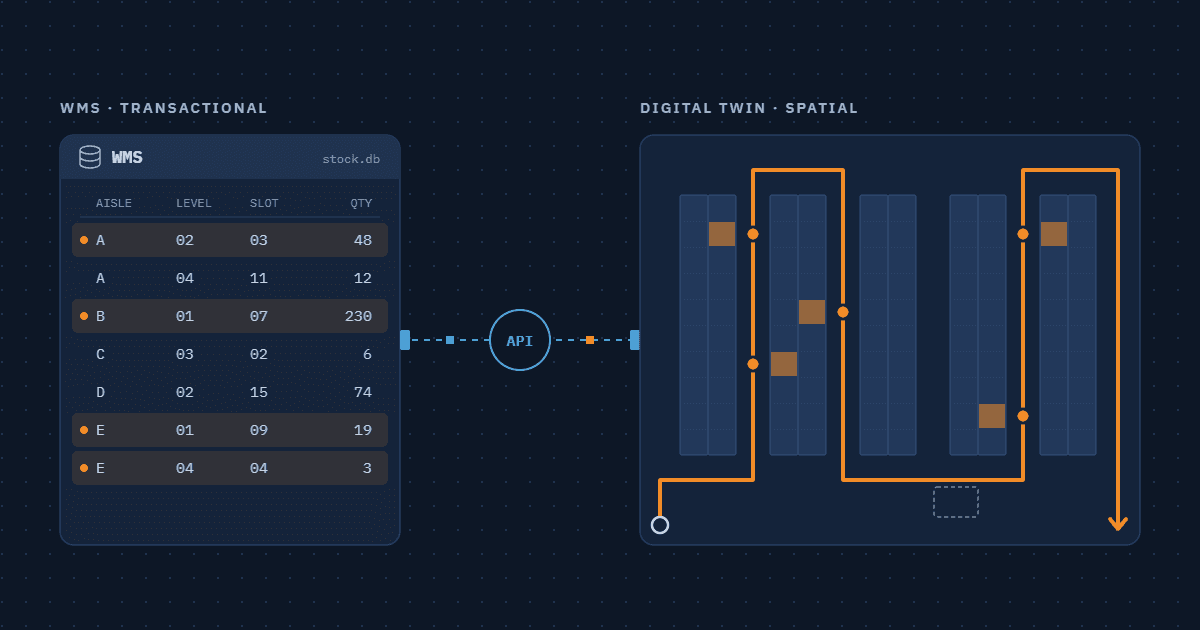
Traditional WMS manage storage locations logically, but often lack the geometric precision needed to model real gains.
Thanks to our software layer and the 3D digital twin of your site, Find & Order enables you to:
- simulate the impacts of your slotting scenarios without disrupting your operations.
- measure actual distance and time savings based on your real picking routes.
- generate progressive re-layout plans tailored to your team's availability.
👉 Want to assess the re-optimization potential of your picking locations?Discover our software solutions and run a simulation on your site.